
The start of 2026 has seen a dramatic shift in the geopolitical landscape following the US military intervention in Venezuela. The capture of Nicolás Maduro, who now faces narco-terrorism charges in New York, represents a significant implementation of the Monroe Doctrine, aimed at reasserting US influence in the Western Hemisphere. While these headlines are historic, their immediate impact on global capital markets remains surprisingly contained.
Historically, global markets have generally looked through geopolitical volatility to the underlying supply and demand. Because Venezuela currently accounts for only 0.1% of global GDP and approximately 1.0% of global oil production, the transmission to broader markets has been limited. US equity markets have remained resilient, and these events have not seemed to significantly impact the long-term stock market outlook.
“Because Venezuela currently accounts for only 0.1% of global GDP and approximately 1.0% of global oil production, the transmission to broader markets has been limited. US equity markets have remained resilient, and these events have not seemed to significantly impact the long-term stock market outlook.”
Venezuela’s infrastructure is currently in severe disrepair and neglect following years of mismanagement, corruption, and declining production. The scale of the challenge is immense, with experts suggesting that fully monetizing the nation's oil reserves will likely require hundreds of billions of dollars and several decades of sustained investment. The oil industry, which has seen production plummet, faces significant technical and financial hurdles.
The physical decay of infrastructure is compounded by a broken legal and commercial framework. Industry leaders have described the current environment as uninvestable due to the lack of durable investment protections and the need for fundamental changes to oil laws. Major energy companies are unlikely to commit the necessary funds for reconstruction until there is bipartisan policy support from both the US and Venezuelan governments, alongside assurances regarding contract sanctity and the repayment of historical debts.
The most significant opportunity lies in Venezuela's proven oil reserves, which rank as the world’s largest and account for nearly one-fifth of the global total. Unlike other regions where the challenge is discovery, industry leaders note that in Venezuela, where the resource is already known, the opportunity lies in developing it into a product that will remain in high demand for decades. US Gulf Coast refiners are uniquely positioned to benefit because their facilities were originally designed to process Venezuelan heavy crude. Access to this feedstock could widen the differential between various oil types, significantly improving refiner margins.
Despite historic geopolitical headlines, markets have remained calm, reflecting Venezuela’s limited near-term impact on global growth and energy supply. Investor focus remains on fundamentals, with US equities showing resilience. Longer term, Venezuela’s vast oil reserves represent meaningful optionality if governance improves, particularly for US Gulf Coast refiners positioned to benefit from heavy crude, supporting a constructive and forward-looking investment outlook.
Economy
The broad economy in aggregate has continued to experience a general expansion. Economic growth is quite strong, with the third‑quarter GDP accelerating to a 4.3% annualized pace, the fastest in two years. This has been driven by robust consumer spending, a rebound in exports, business investment in equipment and AI, and higher government spending.
Core retail sales jumped .8% in October, suggesting underlying consumption remained firm even as headline retail sales were flat. Yet this strength is not broadly shared and is unfolding against a backdrop of elevated inflation, high tariffs, and political shocks that are reshaping trade and energy flows.
The economy is increasingly “K-shaped,” with affluent consumers and large firms continuing to drive growth through strong spending and investment, while lower- and middle-income households and small businesses have been pulling back under rising cost pressures.
Tariffs seem to have now evolved to a central structural feature of the US economic landscape, and not a temporary shock. Average applied US tariff rates have surged from roughly 2.5% at the start of 2025 to the mid‑teens by year‑end, the highest in at least eight decades.
Venezuela has been the center of attention following the US-led capture and removal of President Maduro. The US actions to import Venezuelan crude and sideline China have signaled a more assertive US posture. Still, with Venezuela producing well under 1% of global oil supply, the implications are less about near-term oil markets and more about the evolving geopolitical risk backdrop.
Inflation & Jobs
November data painted a picture of cooling inflation approaching the Fed’s target, alongside easing momentum in the labor market—though not to an overly concerning degree.
Headline CPI slipped to 2.7% year over year, below expectations of 3.1%. A key theme across the inflation coverage is that the November CPI print looks better on paper than it actually “feels. Much of the downside surprise appears tied to government-shutdown‑related distortions. Specifically, there was no data collection in October and only limited collection in November, which means many month‑to‑month comparisons could not be calculated.
On the labor side, the unemployment rate climbed to 4.6% but then recently fell to 4.4%. New jobs were less than expected in December and were revised lower for both October and November. The story is of a market that has shifted from “hot” to “low‑hire, low‑fire” and now risks cracking. Under the surface, stress is building: part‑time work for economic reasons has risen sharply, long‑term unemployment remains elevated versus a year ago, and younger workers are facing a tough entry environment as employers hold headcount flat. Some people feel that the labor market is under pressure with large downside risks, whereas others argue this may be a mature, slower‑growth expansion rather than the clear start of a recession.
“November data painted a picture of cooling inflation approaching the Fed’s target, alongside easing momentum in the labor market—though not to an overly concerning degree.”
The key focal points over the next few months will be whether CPI normalizes higher from the recent distorted prints, how far unemployment drifts above the Fed’s projected peak, and whether consumer and business sentiment weaken further as the “low‑hire, low‑fire” environment persists.
Federal Reserve
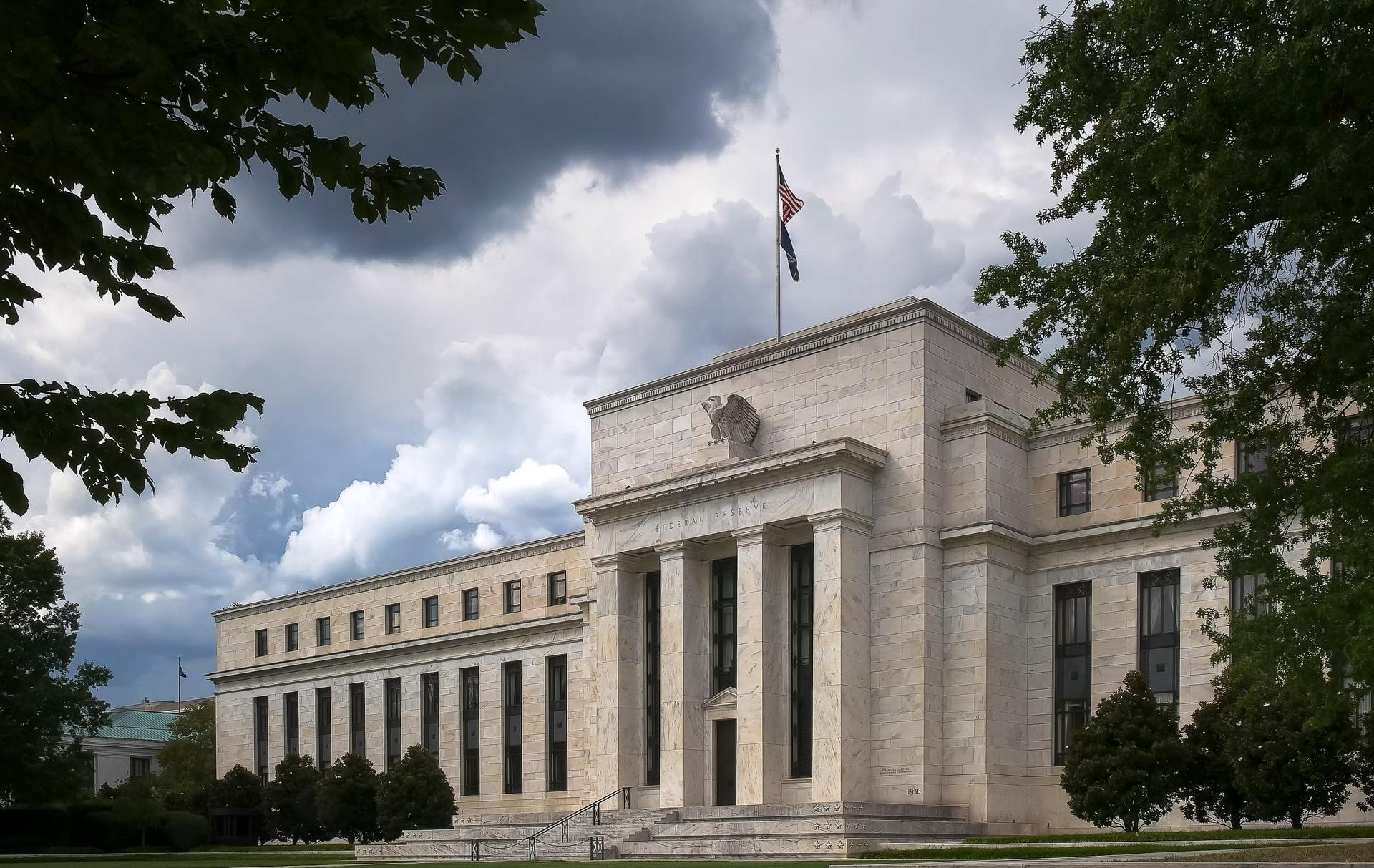
The Fed enters 2026 with unusually high internal division and an uncomfortable tradeoff between a softening labor market and inflation that is still above its 2% target. Throughout 2025, policymakers struggled to balance these twin mandates, leading to a string of contentious meetings and three rate cuts. This split reflects genuine disagreement over whether the bigger risk now is weaker hiring or inflation that could prove sticky, especially given distortions in recent inflation data.
The Fed story going into 2026 is one of heightened uncertainty rather than a clean pivot. The committee is signaling a cautious bias toward further cuts over time, but wants more reliable data after the shutdown‑driven gaps in inflation reporting and amid a cooling labor market.
Looking ahead, Powell’s term expires in May, and Trump has signaled he will replace him. The choice of a new Fed chair is widely seen as one of the most consequential events of 2026. This is because the next leader will have to manage both internal divisions and intense pressure from the administration for lower rates, all while maintaining credibility with markets.
“The choice of a new Fed chair is widely seen as one of the most consequential events of 2026.”
Internationally, the broader global central‑bank backdrop has shifted from aggressive tightening to the largest wave of easing since the financial crisis. In 2025, nine of the central banks overseeing the most‑traded currencies, including the Fed, ECB, and Bank of England, delivered a combined 8.5% cumulative rate cut. Emerging‑market central banks have also been aggressively easing after getting inflation under control earlier and more proactively than many developed markets.

Stocks
Risk assets such as stocks have delivered another year of strong gains, even as the dollar weakened and some speculative areas like crypto underperformed. This underscores a market still responsive to liquidity and rate expectations but wary of policy and geopolitical shocks.
In the US markets, large-cap stocks ended the year far higher than small-cap stocks. Small caps have continuously been troubled by a higher interest rate environment. The transition to lower rates may create momentum for small caps.
Foreign markets had a tremendous total return in 2025, with most broad markets posting returns north of 30%. This has, in part, been supported by strengthening foreign currencies relative to the US Dollar.
Bonds
The Treasury market quietly delivered its best year since 2020 as weaker labor market data, tariff‑related uncertainty, and a six‑week government shutdown all weighed on growth expectations and influenced the Fed to cut rates.
Under the surface, the move was more nuanced than a simple “rally across the board.” The biggest yield declines came in shorter maturities, while the 30‑year yield actually finished the year slightly higher.
10‑year Treasuries traded in their tightest range since 2021. This pattern may reflect a market that expects policy rates to move lower over time but remains wary about long‑term fiscal risks, tariff implications, and the administration’s pressure to ease interest rates.
Corporate bonds have also performed well for the year, with high-quality, low-quality, and floating-rate bonds generating total returns in the 7% to 9% ranged. Even foreign bonds generated strong returns over this time, with emerging market debt posting total returns of approximately 13% for the year!
Heading into 2026, we believe that approaching bonds with some caution is warranted. With the Fed’s cutting cycle well underway, it is difficult to know how much of the future rate-cutting potential is already factored into current bond prices.
© Advisory Alpha. Registration with the SEC or a state does not constitute an endorsement of the firm by regulators, nor does it indicate that the adviser has attained a particular level of skill or ability. This content is for informational purposes only and does not intend to make an offer or solicitation for the sale or purchase of any securities. Investing involves risk, including the potential loss of principal. No investment strategy, such as asset allocation or diversification, can guarantee a profit or protect against loss in periods of declining values. All investment strategies involve risk and have the potential for profit or loss. Changes in investment strategies, contributions or withdrawals, and economic conditions may materially affect the performance of your portfolio. There are no assurances that a portfolio will match or outperform any particular benchmark. Investors should carefully consider the investment objectives, risks, fees, and expenses before investing. Any financial services firms referenced in this material do not provide tax or legal advice. Please consult with your tax or legal professional regarding specific issues prior to making a tax or legal decision.
The performance information presented in the asset category section of this report is based on equal-weighted averages of the following Morningstar Categories: US Stocks (US Fund Large Blend, US Fund Mid-Cap Blend, US Fund Small-Blend), Foreign Stocks (US Fund Foreign Large Blend, US Fund Foreign Small/Mid Blend, US Fund Diversified Emerging Mkts), US Bonds (US Fund Intermediate Government, US Fund Inflation-Protected Bond, US Fund Corporate Bond, US Fund High Yield Bond, US Fund Bank Loan), Foreign Bonds (US Fund World Bond, US Fund Emerging Markets Bond), Hard Assets (US Fund Commodities Precious Metals, US Fund Commodities Energy, US Fund Global Real Estate, US Fund Real Estate), Hybrid Assets (US Fund Convertibles, US Fund Preferred Stock).
© 2025 Morningstar. All Rights Reserved. The information contained herein: (1) is proprietary to Morningstar and/or its content providers; (2) may not be copied or distributed; and (3) is not warranted to be accurate, complete, or timely. Neither Morningstar nor its content providers is responsible for any damages or losses arising from any use of this information. Past performance is no guarantee of future results. Morningstar category data is provided for illustrative purposes only to demonstrate a hypothetical investment vehicle represented by a group of similar investments. Morningstar category data is an aggregation across actual funds contained in the category, but it is not possible to directly invest in a category. Index returns are provided for illustrative purposes only to demonstrate a hypothetical investment vehicle using broad-based indices of securities. Unmanaged indexes are not available for direct investment. All data shown does not include internal fund expenses, trading costs, financial advisor fees, commissions, or taxes. This information is not intended to predict the performance of any specific investment or security. Past performance is no guarantee of future results.
Bureau of Labor Statistics. Unemployment Rate, Total Nonfarm Employment, Labor Force Participation, Consumer Price Index, Producers Price Index. www.bls.gov. United States, Department of Commerce, Bureau of Economic Analysis. Personal Consumption Expenditures, Gross Domestic Product, Consumer Spending, Personal Income, and Outlays. www.bea.gov. Federal Reserve. Fed Funds Rate, Fed Funds Target Range, Minutes of the Federal Open Market Committee, Board of the Federal Reserve System Calendar. www.federalreserve.gov. Trump, Donald. @realDonaldTrump. Truth Social.